Ed’s Produce: Cutting and Storing Summer Fruits!
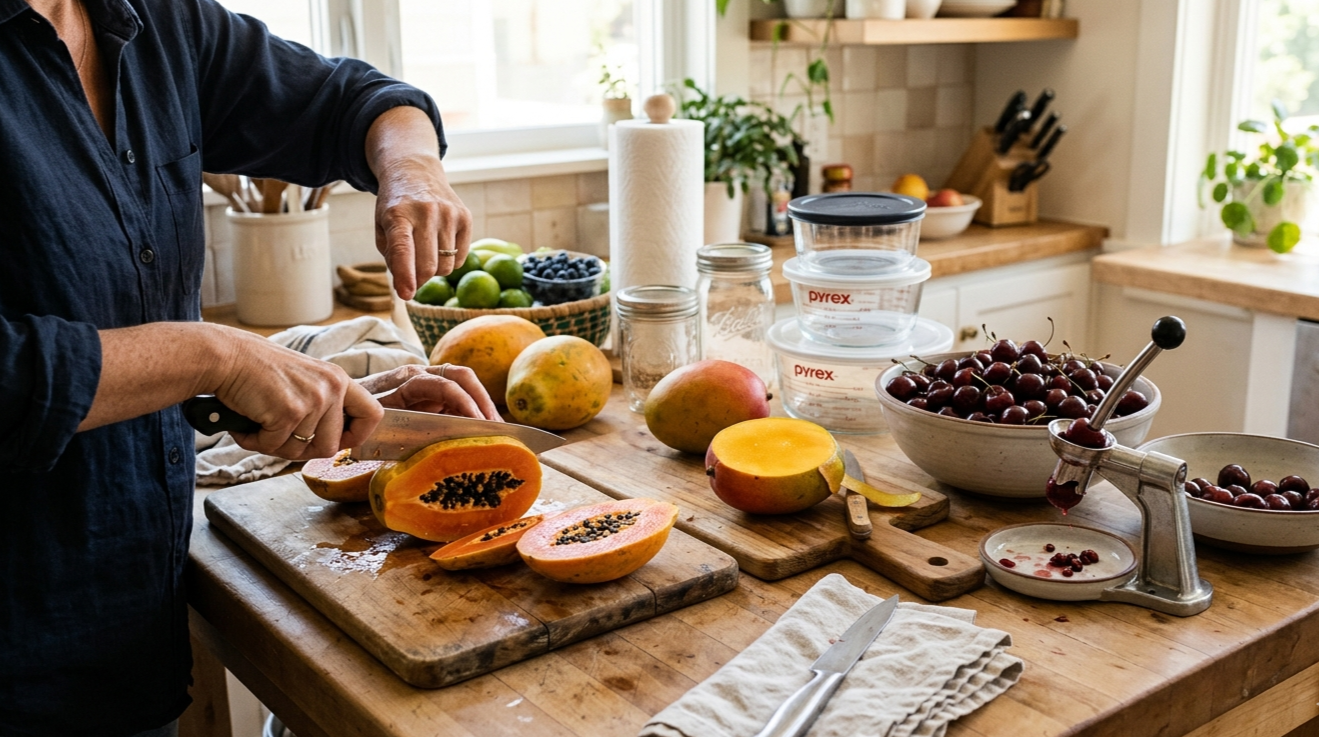
Summer fruits are prized for their vibrant flavors and natural sweetness! They can sometimes be challenging to cut and store correctly, so properly handling the fruit is crucial in maintaining quality, reducing food waste, and maximizing shelf life. Understanding each fruit is the first step in the cutting and storage process. Let’s dive in!
Before cutting into any fruit, it is important to wash the exterior under cold water and pat it dry with a towel to reduce the risk of harmful bacteria. If you are immediately storing the fruit, it is best to wash it close to when you plan on eating it to reduce excess moisture. Using a sharp knife and stable cutting board are ideal for clean cuts.
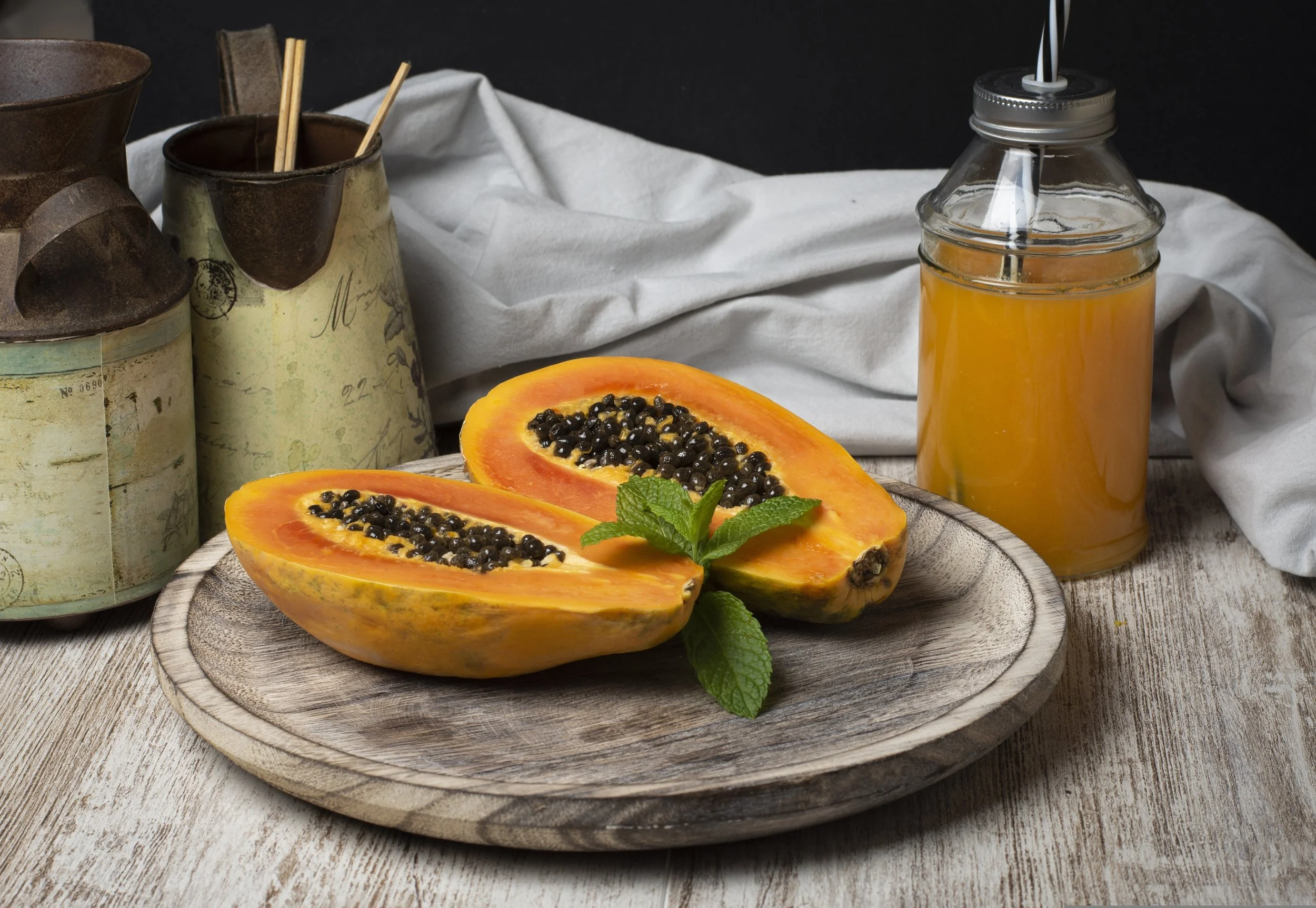
Papaya is a tropical fruit that contains numerous edible black seeds and a soft orange flesh. Papaya can be easily cut when placed lengthwise on a cutting board and sliced in half from stem to blossom. Use a spoon to scoop out the seeds from the cavity, then scoop the flesh out or peel the skin with a knife or vegetable peeler. It is best to cut papaya into wedges, cubes, or thin slices since it becomes soft when ripe. Papayas can ripen at room temperature until the skin becomes yellow or orange, then should be refrigerated to slow down further ripening. Cut papaya should be refrigerated in an airtight container and consumed within a few days.
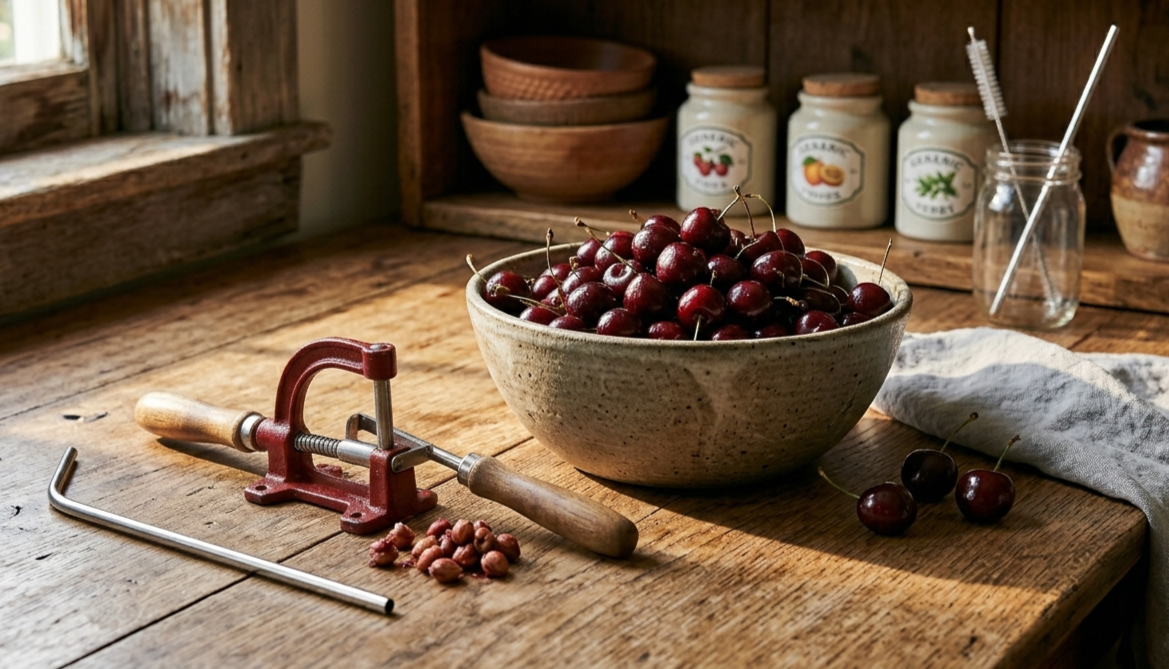
Cherries are an easy fruit to prepare if you have the right tools like a cherry pitter, but can be done the same way with items at home. To pit a cherry, remove the stem and place the fruit over an opening like a chopstick or reusable straw, pressing through the center until the pit is released. Since cherries are highly perishable, they should be refrigerated as soon as possible. They can be stored unwashed in a breathable container or loosely sealed bag for about a week.
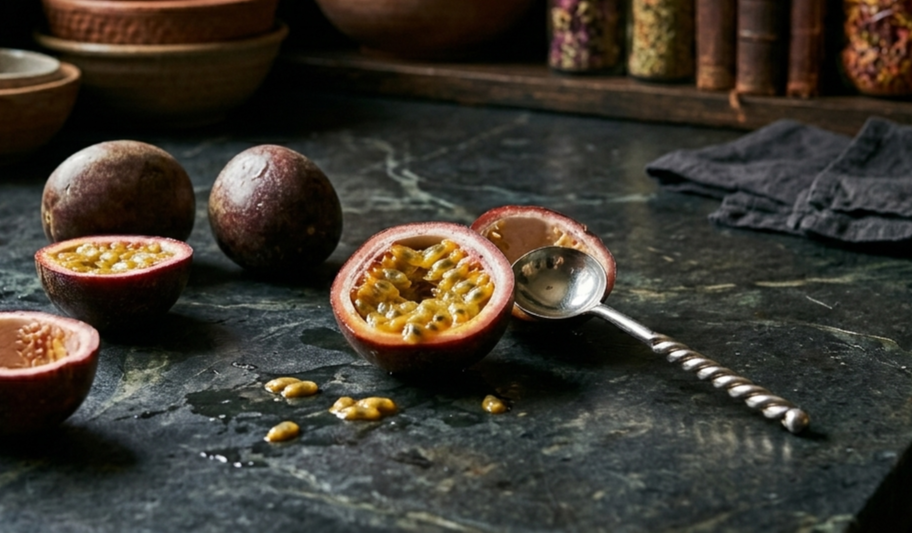
Passionfruit contains a protective rind that makes preparation easy. Place the fruit on a stable surface and cut in half crosswise so the pulp and seeds can be scooped out. Passionfruit can be stored at room temperature until ripe then placed in the refrigerator for roughly one week.
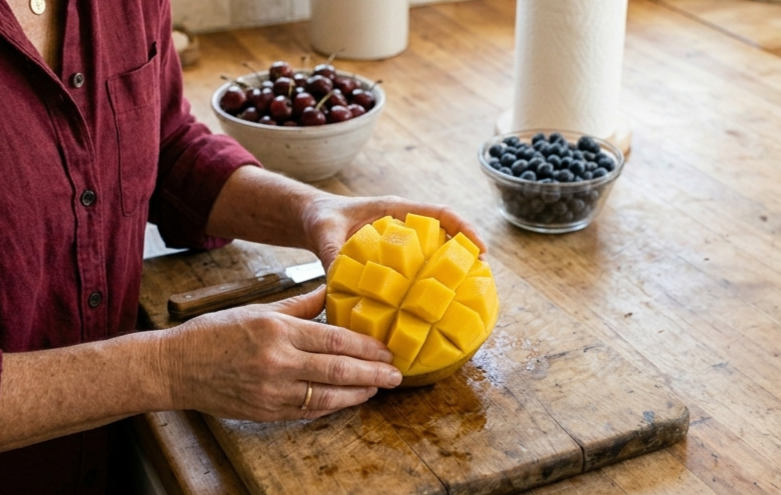
Mangoes may appear to be more difficult to cut when compared to previous fruits, but can be easily pitted with proper orientation. They contain a flat pit in the center, so it is best to position the mango upright with the stem end up and slice downward on either side of the pit to remove the cheeks of the mango. Once the cheeks are removed, score the flesh in a grid pattern without cutting through the skin and push the skin upward to open the cubes. This method is referred to as the hedgehog technique. Mangoes can be stored at room temperature until they soften slightly then can be placed in the refrigerator. Like papaya, cut mangoes should be stored in an airtight container and consumed within a few days.
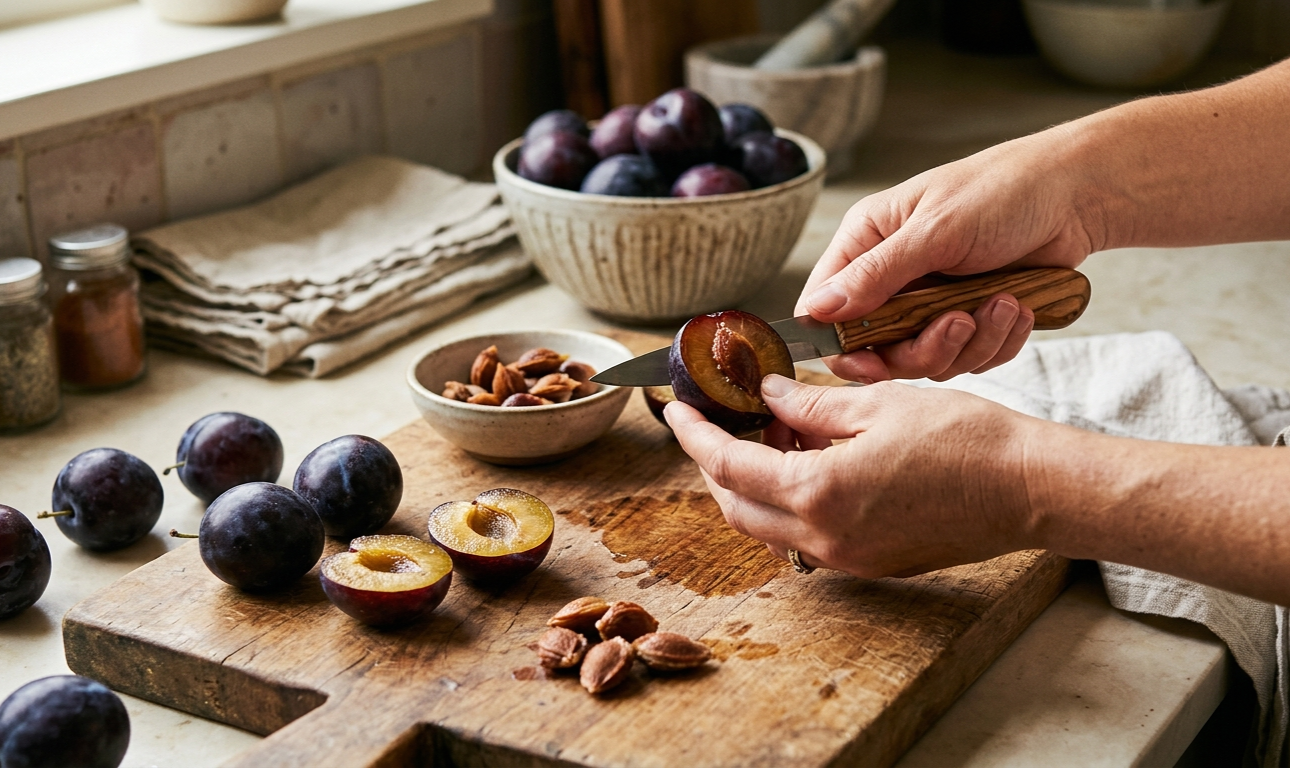
Plums belong to the stone fruit family, meaning they have a single hard pit in the center. Position the knife against the pit and slice around the circumference while rotating, then twist the halves in opposite directions. Plums can be left at room temperature to continue ripening until they become soft and yield slightly to pressure.
It is crucial to understand there are multiple factors that cause fruits to go bad, so temperature, airflow, and moisture control play important roles in preserving the quality of fruit, especially ones that continue to ripen after harvest. Some fruits, such as papayas, mangoes, and plums produce ethylene gas, which sometimes accelerates ripening. Cut fruit like mango cubes, papaya chunks, cherry halves, and passionfruit pulp can be stored in the freezer for long-term preservation. Fruits have various uses ranging from eaten raw, blended, added to dishes, used as garnishes, and many more. Learning proper cutting techniques, storage conditions, and the structure of the fruit will make summer fruit season a breeze!