December is National Pear & Turnip Month!
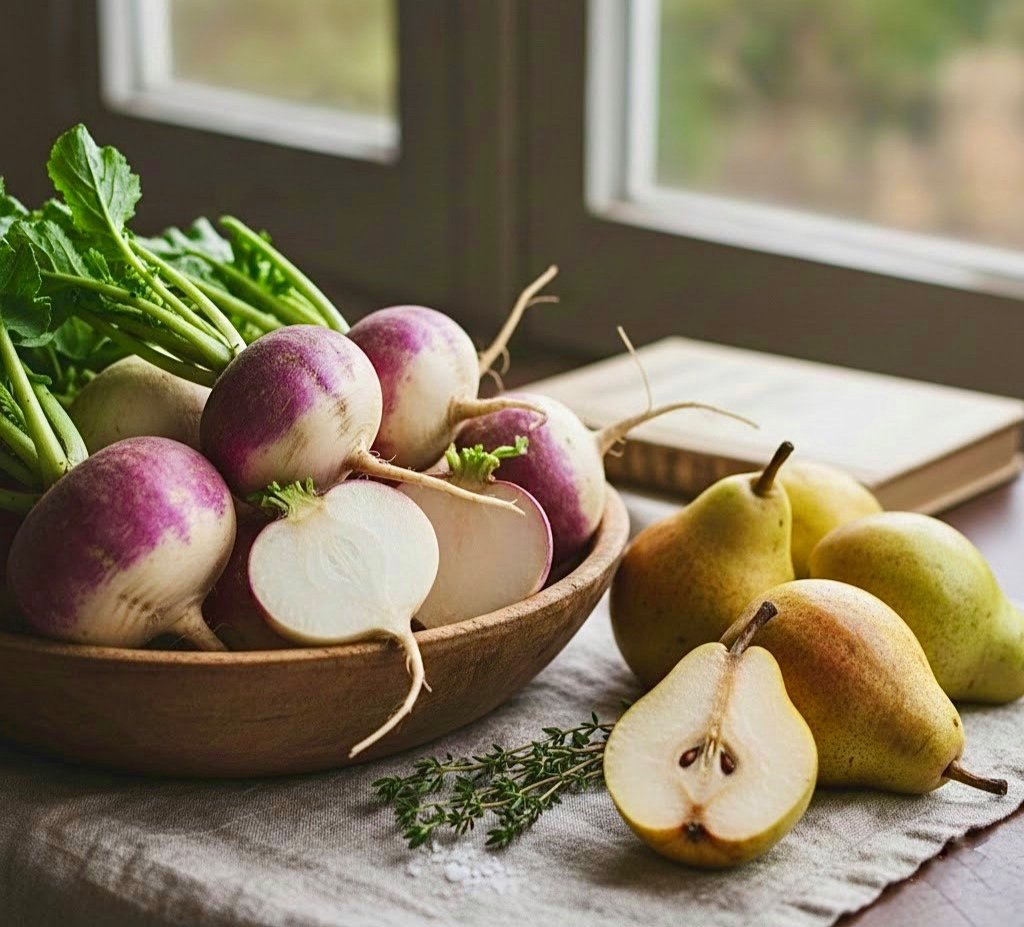
As the year winds down, December highlights two delicious produce items that are often hidden from the spotlight. Both pears and turnips are highly versatile and reach their peak flavor during the colder months, making December a perfect month for harvest!
Pears

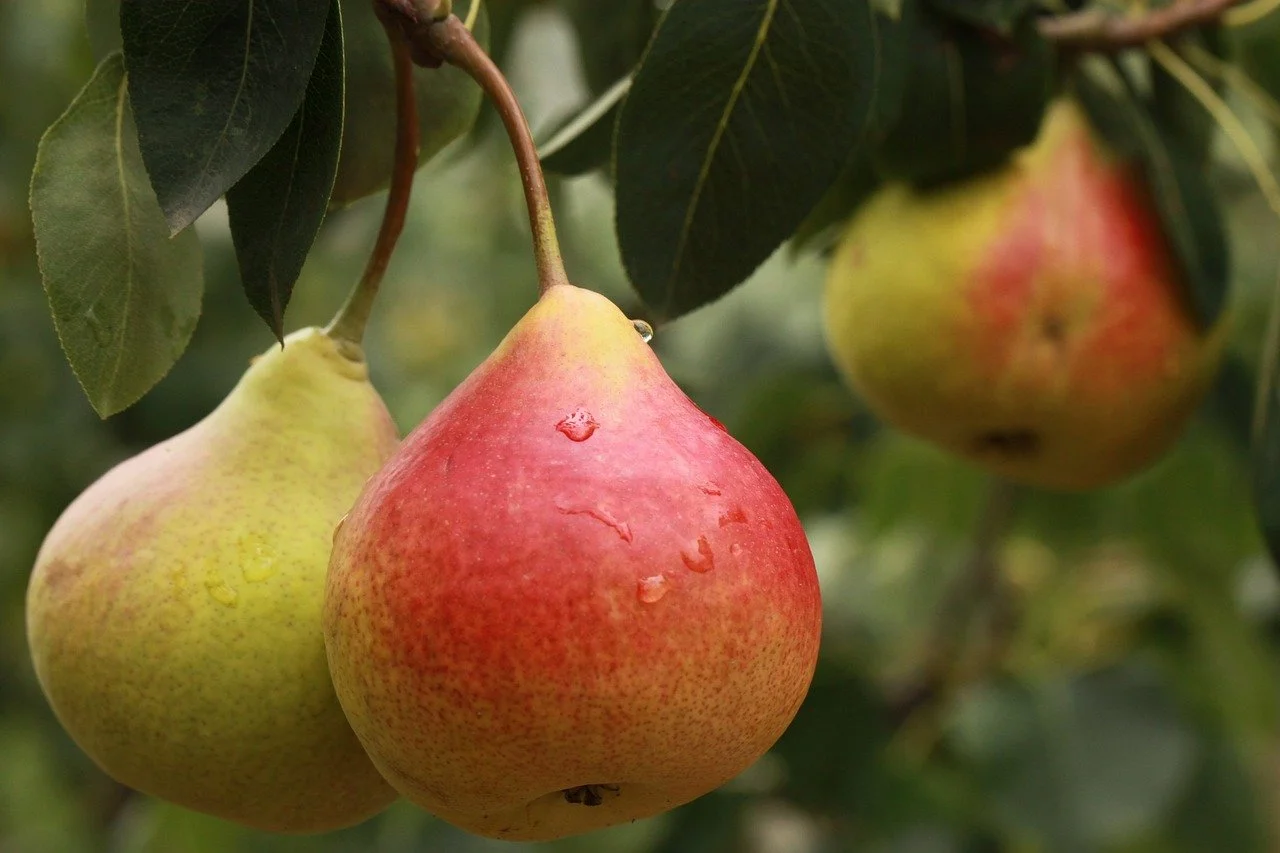

Pears are a favorite fruit the have been a staple for centuries. They symbolize abundance and are connected to longevity and resilience, reflecting the long lifespan of pear trees and their ability to survive in challenging climates. They can represent gratitude as well, which makes them an excellent choice of fruit to gift in the colder months. Pears come in various shapes and sizes, but can be separated into two major categories: European pears and Asian pears. Some well-known European pear varieties include Anjou, Bosc, Bartlett, Seckel, and Comice. These pears soften with time and typically ripen off the tree, producing a sweet, almost floral taste. Some popular Asian pears include Housi, Ya Li, Shinseiki, and Nijisseiki, commonly referred to as 20th Century. These pears remain firm when ripe and have a crispy, juicy texture similar to apples. Pears range in color from green to yellow to golden brown to red. Pears are usually harvested in the early fall, between early September and late October. Pears are mature when they are picked, but are still firm, so they need extra time after being picked to become perfectly ripe. Once ripened, pears can be eaten both raw and cooked. European pears are often used in baking, roasting, and preserves, while Asian pears excel when used raw due to their crisp texture and high water content. This can include salads, marinades, and charcuterie boards to name a few.
Turnips
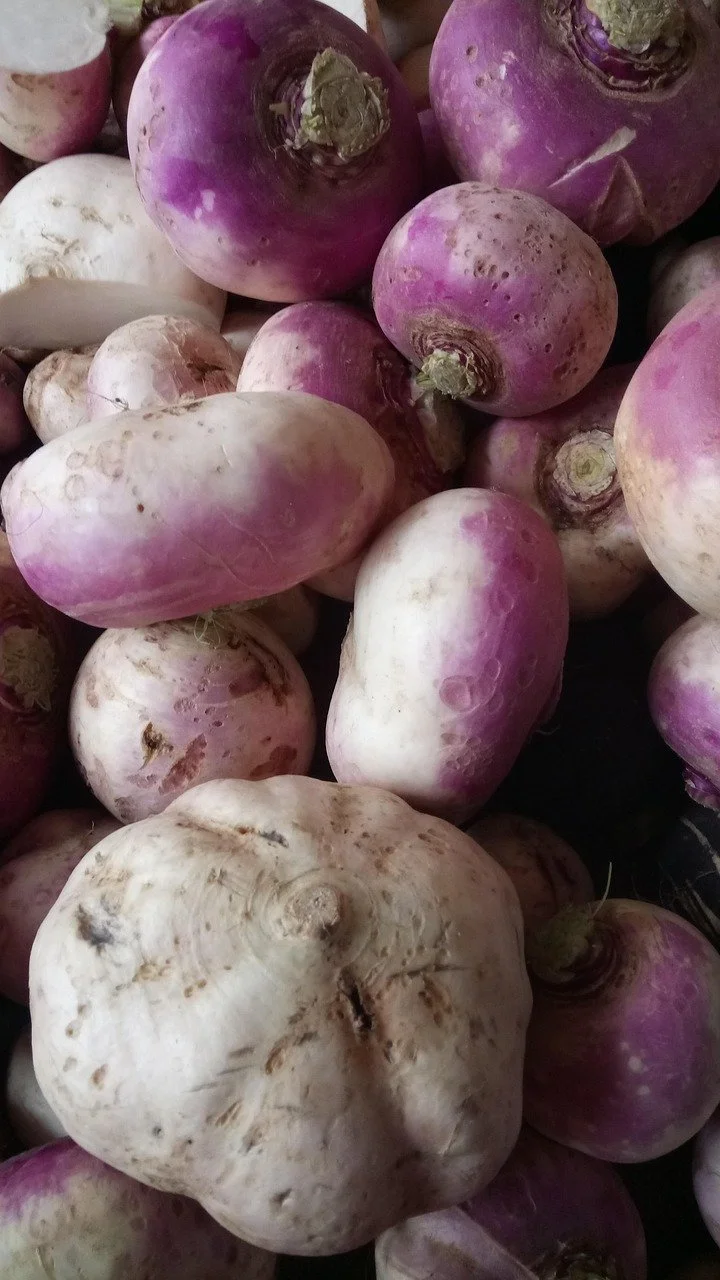
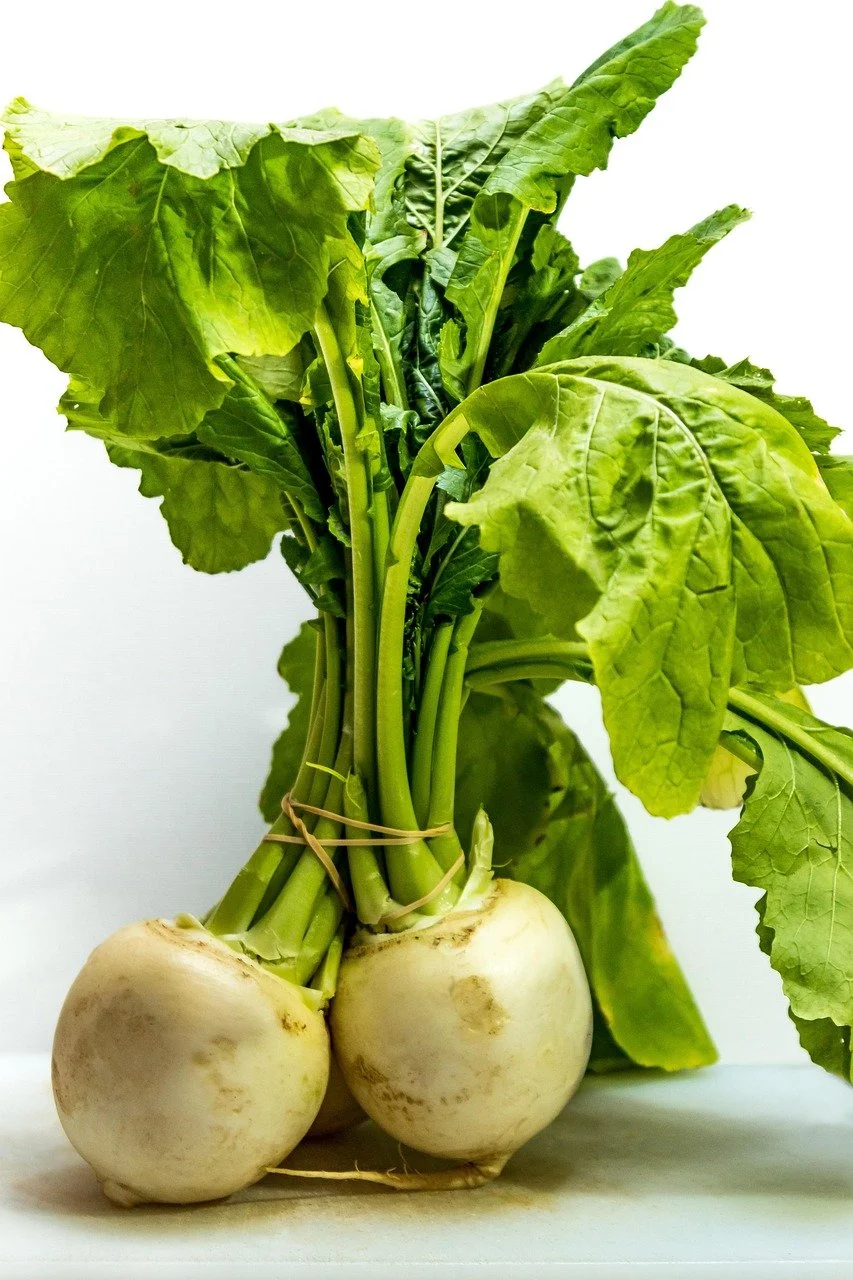
Turnips are one of the oldest known root-vegetable crops, traditionally representing the harvest and protection. In some cultures, they used to be carved with scary faces to ward off evil spirits. Turnips come in a wide range of varieties with noticeable flavor differences varying with size and age, from colors spanning white to purple to golden to red. Although there is not a formal division, turnips are often grouped into two categories of Storage turnips and Japanese turnips based on their characteristics. Popular storage turnips include Purple Top White Globe, Golden Ball, Scarlet Queen, and White Egg. These turnips are large and dense, often with earthier flavors as they mature. Storage turnips are commonly used in stews, roasts, and braises. Popular Japanese turnips include Hakurei, Shogoin, and Tokyo Cross, which are bred to be tender and mildly sweet. They have a thin skin, juicy texture, and non-bitter taste, unlike storage turnips. Due to their sweet, tender composition, Japanese turnips can be eaten raw, such as in salads or paired with a dip with no issue. Turnips thrive in cool climates and are typically harvested in late fall. Young turnips are often sweeter than older or larger turnips, which have a slight peppery flavor as they mature. Once turnips are picked, the green tops should be removed to keep the roots firm and prevent moisture loss, ensuring freshness longer. They can be stored unwashed and loosely wrapped in the refrigerator for up to three weeks.
Together, pears and turnips demonstrate the versatility of winter produce!