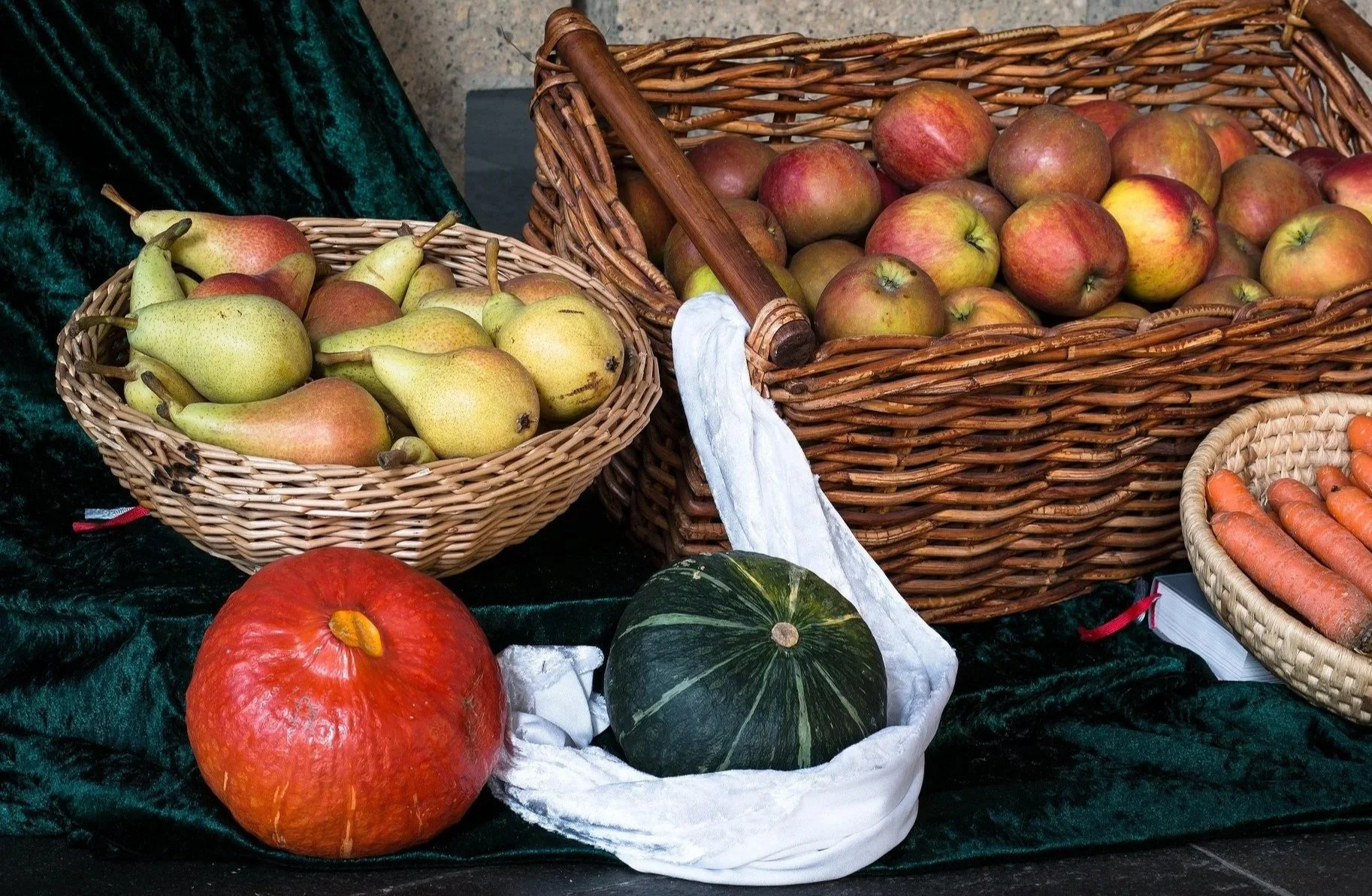
Kabocha squash & Bosc pears may not be the typical duo you see, but their rich natural sweetness and robust textures bring versatility to November dishes. Let’s dive into what makes each fruit special!
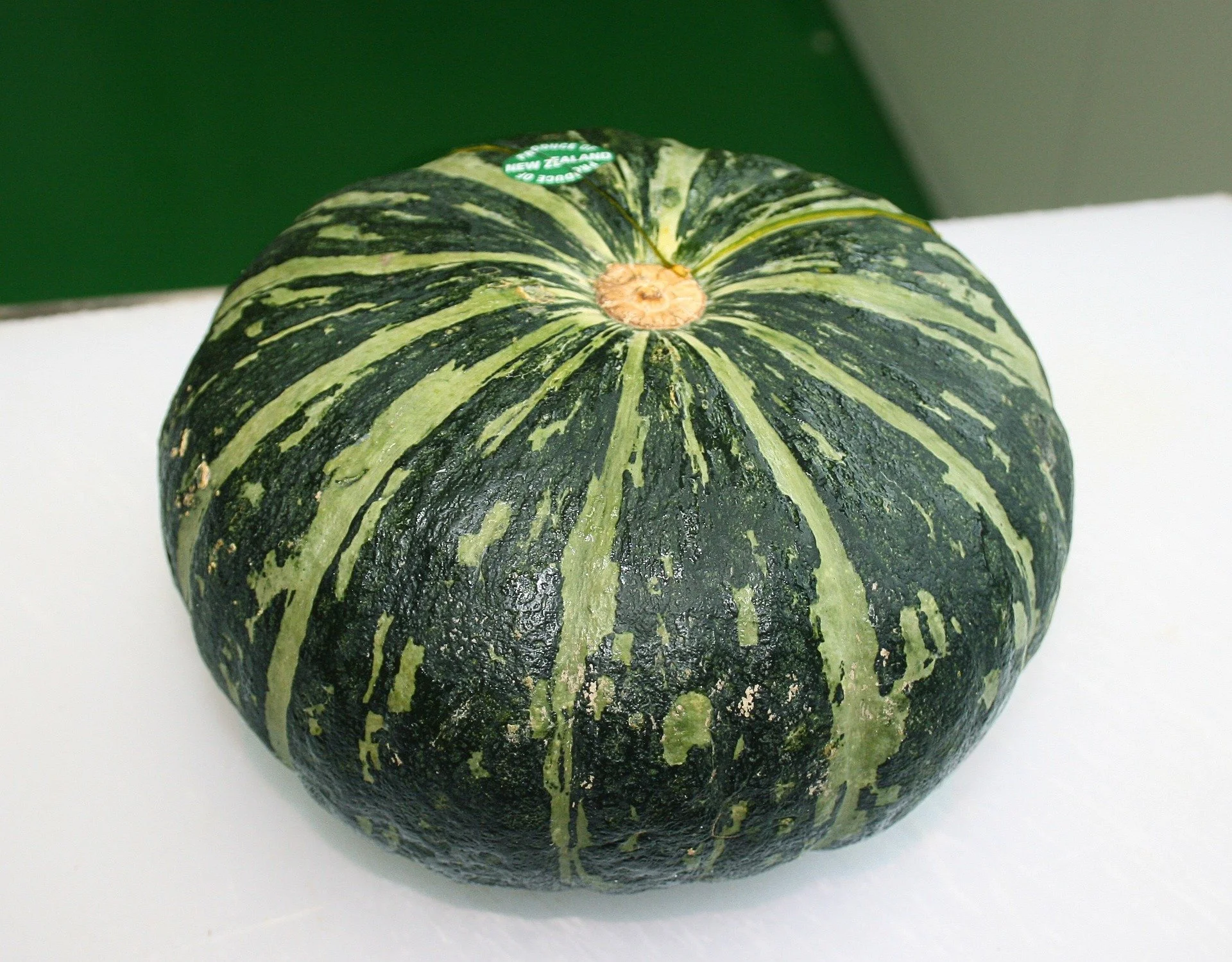
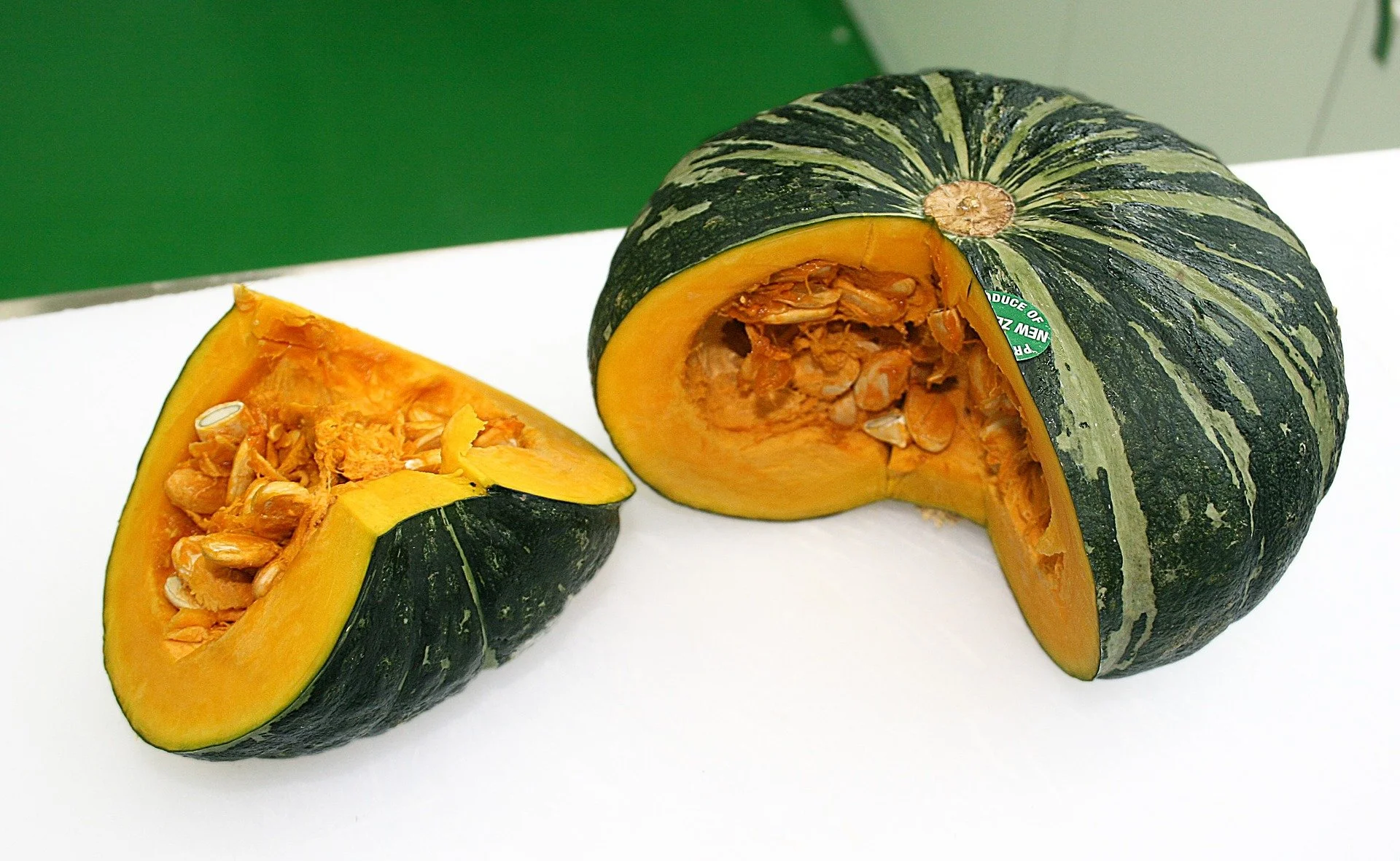
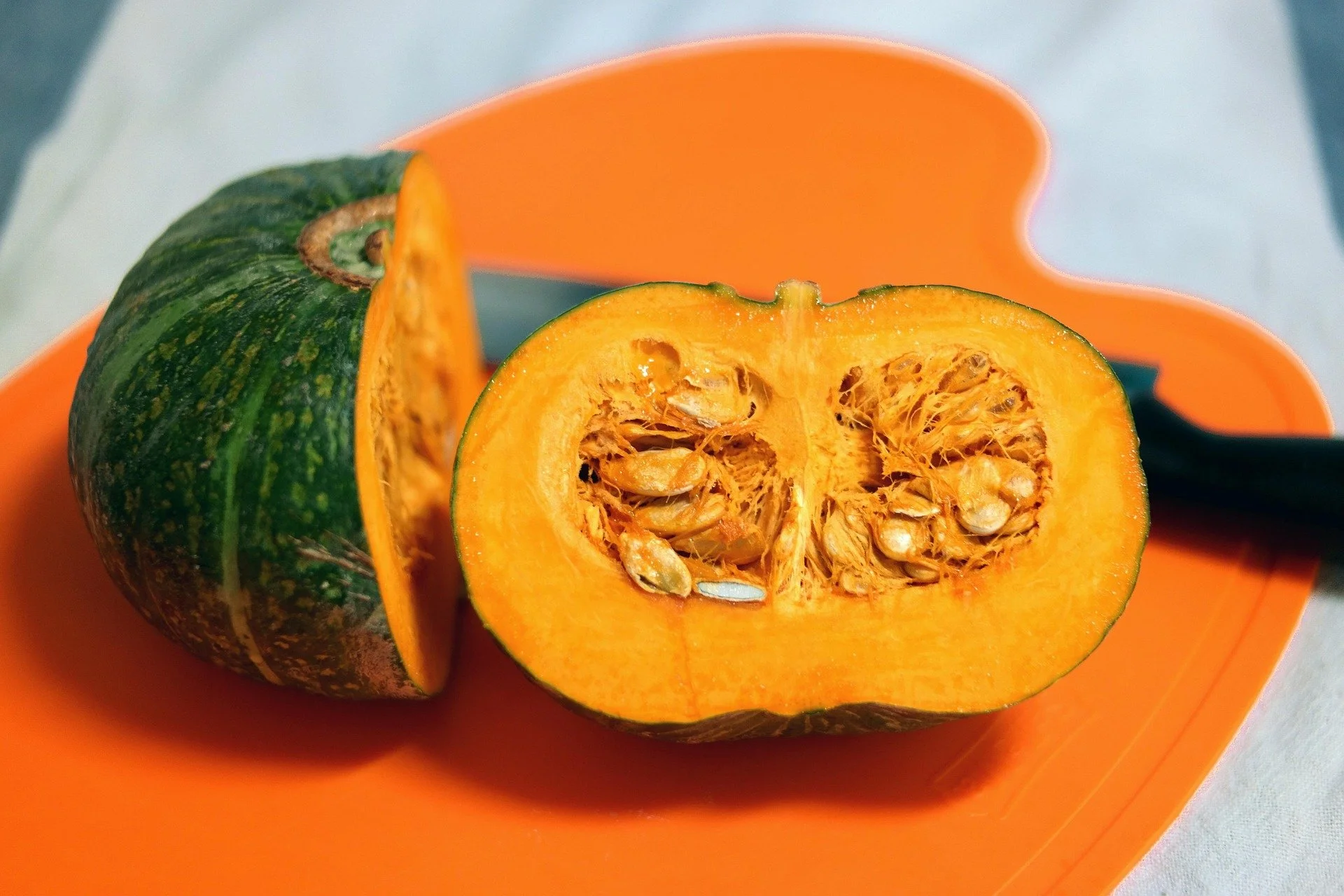
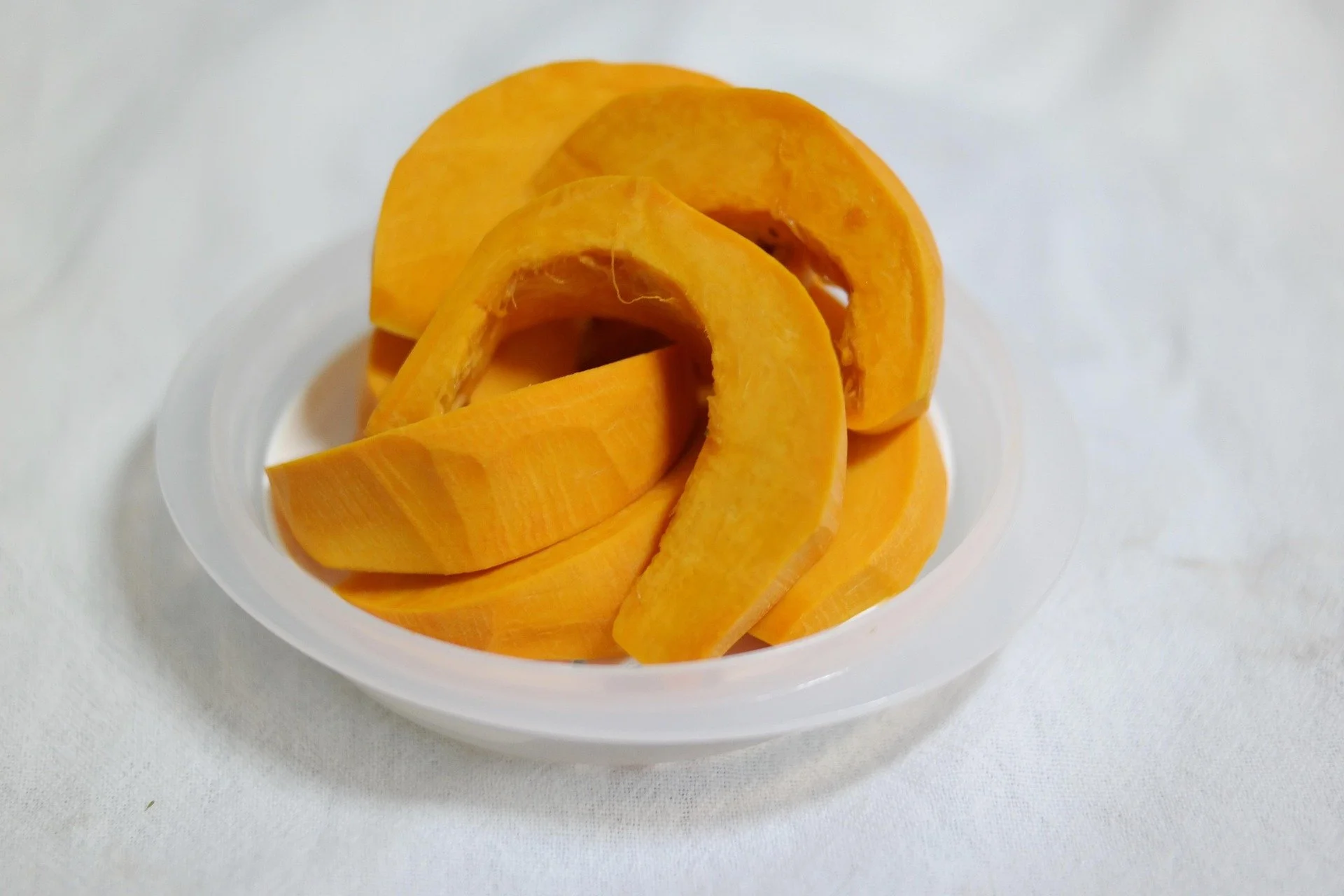
Kabocha squash, also known as Japanese pumpkin, is a winter squash known for its dull, deep-green rind and squat shape. It features a rich, nutty profile with hints of chestnut, tasting reminiscent of a cross between a sweet potato and a pumpkin. Botanically, squash is considered a fruit, but it is often grouped with vegetables in culinary applications due to its savory, earthy flavors. Since kabocha contains a lower water content than other squashes, it becomes dense and creamy without needing additional heavy cream. Unlike tougher varieties such as Butternut that typically require peeling, the rind on kabocha squashes softens and becomes completely tender when roasted, making their skin completely safe to eat while providing a rich source of fiber and vitamins A and C! Beyond roasting, kabocha can be pureed into flavorful soups and curries. Despite its strong association with Japanese cuisine, kabocha actually originated in Mesopotamia and South America. Portuguese sailors introduced it to Japan via Cambodia in the 16th century, where the squash was selectively bred by local growers to be exceptionally sweet and dense.
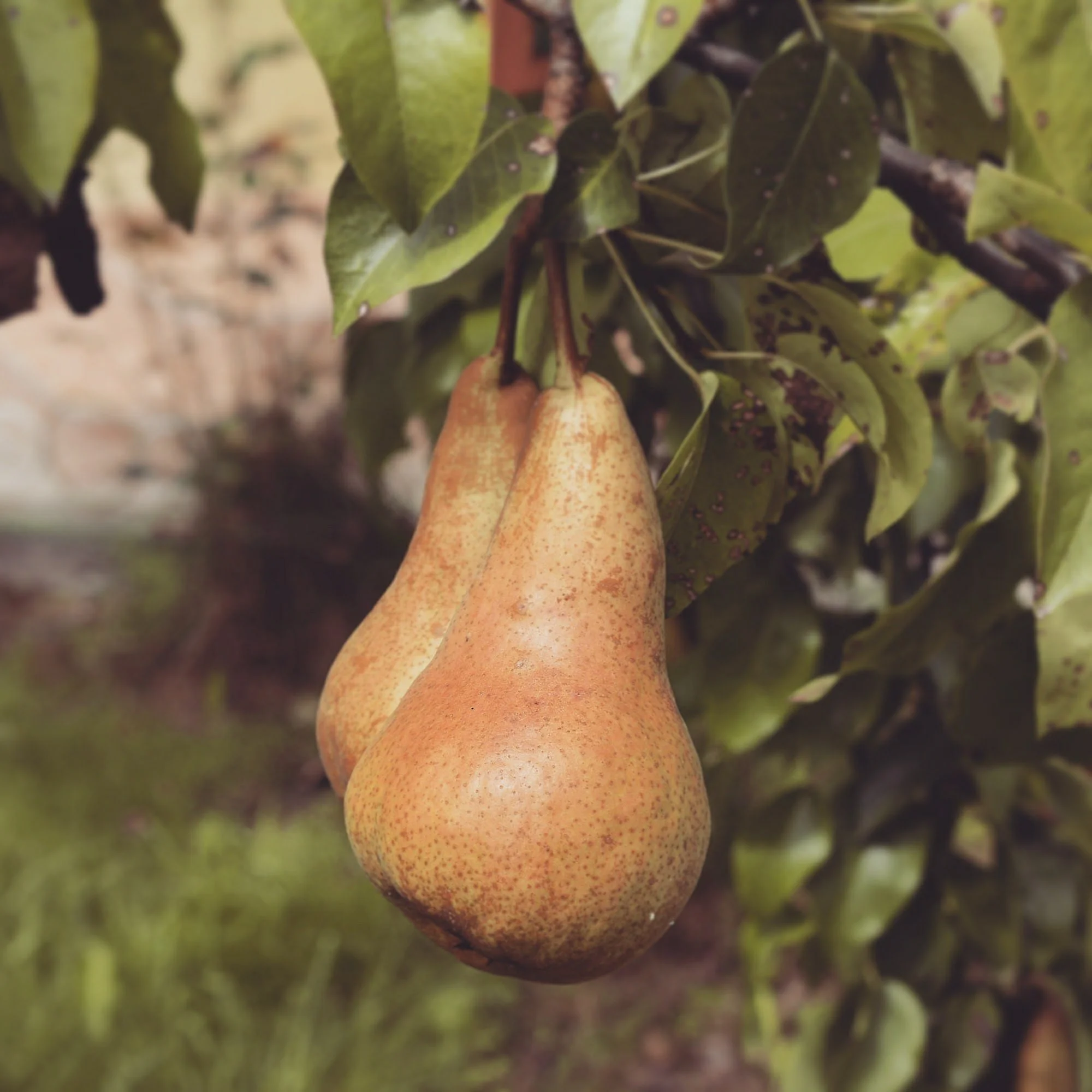
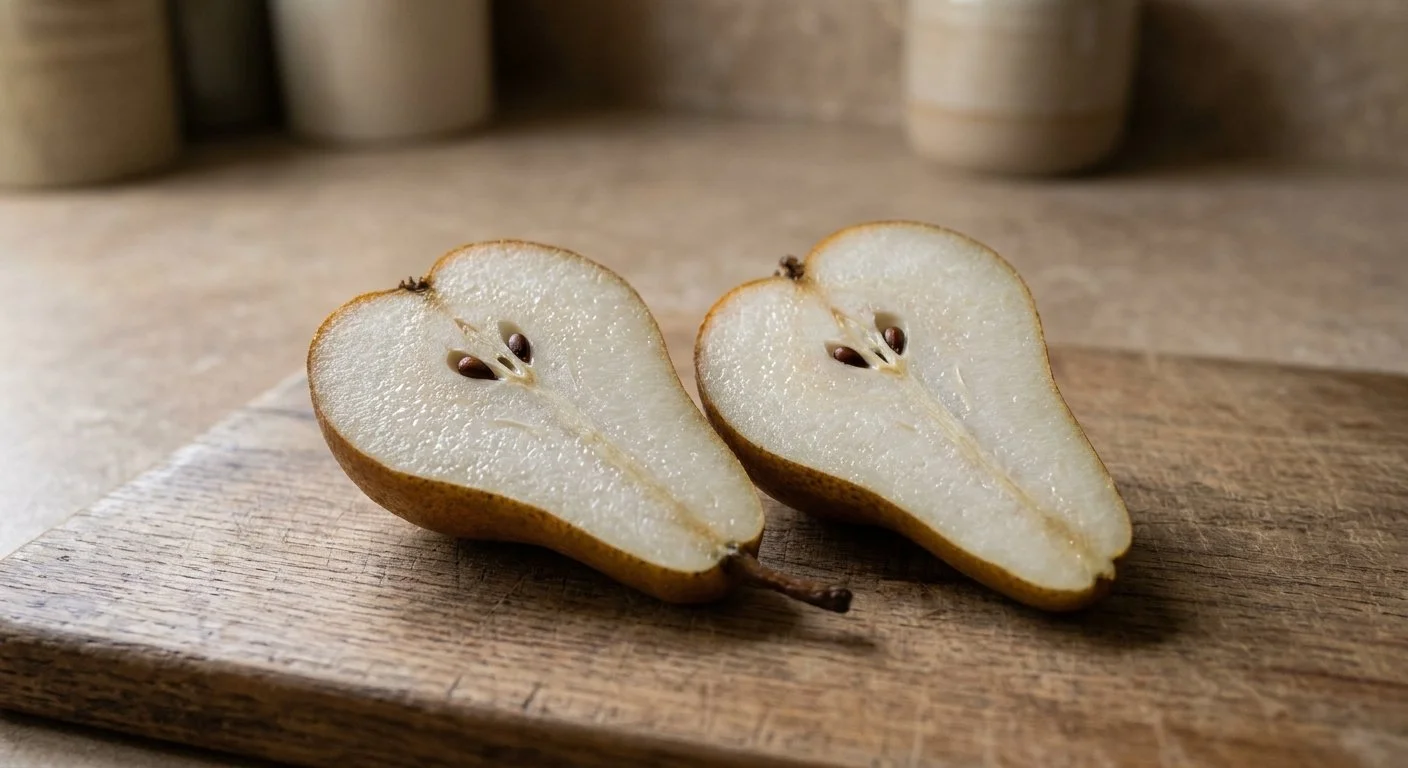
Bosc pears are fruits known for their elegant, long necks and cinnamon-russet skin. They possess a rich, honey-like sweetness with subtle notes of cinnamon and nutmeg coming through their natural flavor profile, which can heavily compliment Kabocha when paired together. They are high in dietary fiber, such as insoluble and soluble pectin, as well as copper and potassium. Bosc pears have a firm, dense flesh that can withstand heat and hold their structure without turning to mush. Their sturdy texture gives them excellent stability in storage, making them a perfect centerpiece for fall tables! Originating in France and Belgium during the 1800s, the fruit was initially named after Beurré Bosc, in honor of French botanist and director Louis Augustin Guillaume Bosc. This variety was introduced into the United States around 1832, where it found ideal growing conditions in the Pacific Northwest region. As with most produce aiming for proper ripeness is key. It can sometimes be difficult to determine ripeness solely by looking at the outside of a pear, since Bosc pears mature from their core outward. Because Bosc pears do not change their color dramatically as they mature, applying gentle pressure to the top of the stem or “neck” can signify readiness. If the pear yields slightly, it’s ready to be picked!
As November continues and Thanksgiving approaches, don’t hesitate to incorporate less common produce into your fall dishes! Kabocha squash and Bosc pears both add a sweet twist on your typical holiday favorites!